
Dry Needling & Acupuncture: Is There a Difference?
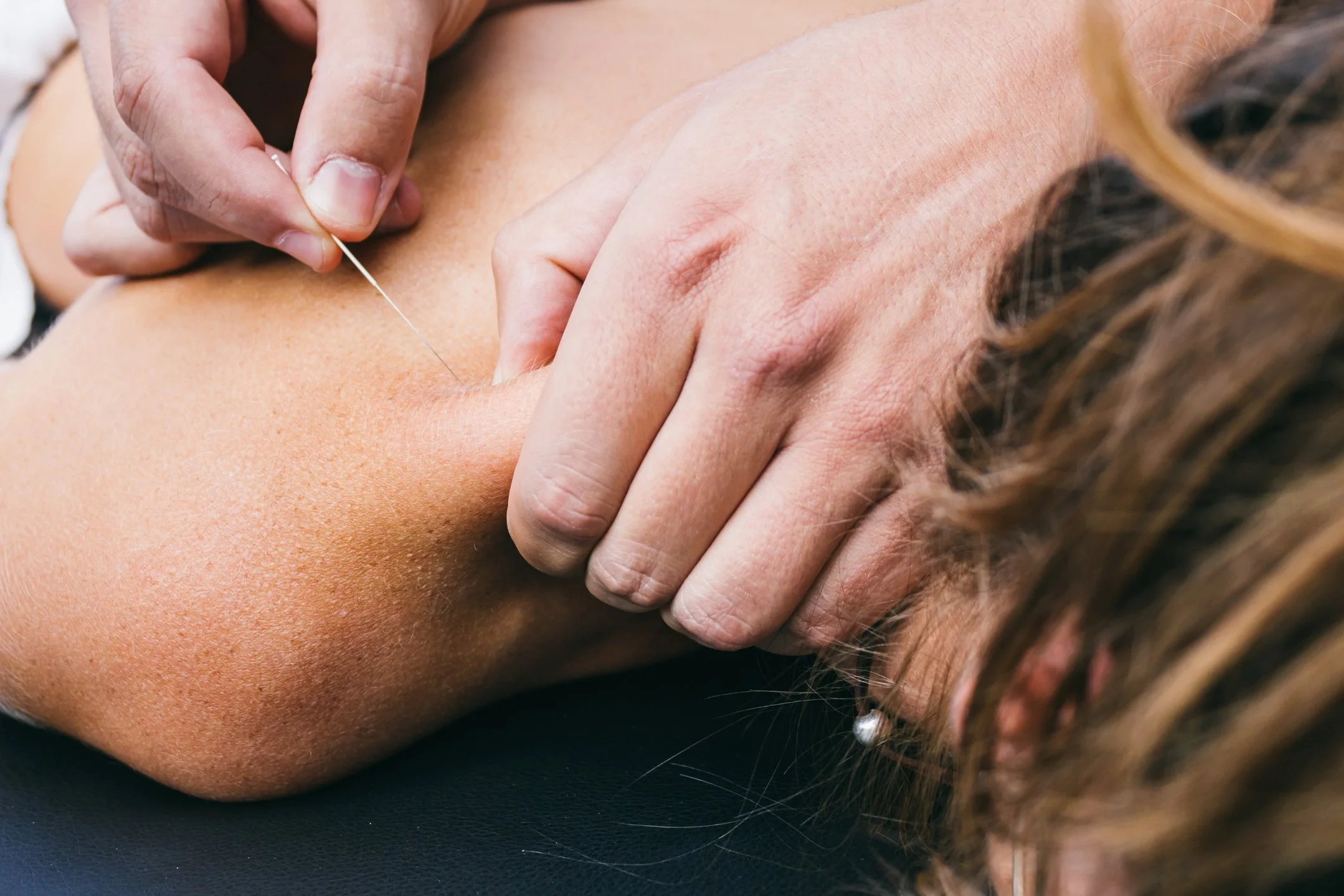
A commonly used ACUPUNCTURE point, GB21 (Gallbladder 21), for shoulder + neck pain.
Modern myofascial release therapy has its roots in traditional Chinese medicine (TCM)
— contributed by Virginia Schuler, L.Ac
People often ask about the differences between dry needling and acupuncture. It can be confusing. I mean, what is dry needling, exactly? Where did the term come from? And why do some acupuncturists say they use dry needling?
I thought it might be helpful, especially with the April 20th article that just came out in the New York Times, to break it down for you.
Technically, dry needling IS a form of acupuncture that Chinese medicine practitioners have used for millennia to treat musculoskeletal pain. The term “dry needling” materialized when professionals such as chiropractors and physical therapists, without acupuncture licenses, started incorporating the technique into their practices. They use this term because they aren’t legally allowed to say they offer acupuncture.
However, there are some major differences between the technique we know as dry needling and the style of needling that acupuncturists use to treat internal medicine issues like insomnia, infertility, and gut dysbiosis.
Dry Needling Versus Meridian-Based Needling
The Chinese meridian system offers a way for acupuncturists to impact internal organs, as well as systemic health, by needling specific points on the skin. This style of needling is often a lot gentler than dry needling and is based on the flow of “qi” through the entire body. We can loosely translate “qi” to “energy,” but it also encompasses the body’s hormonal, neurochemical, electrical, and even structural network of intelligence. Qi permeates blood and body fluids, so needling meridian-based acupuncture points also affects circulation and lymphatic flow.
On the other hand, dry needling solely focuses on muscles and connective tissue, not internal organs. It’s an effective technique for treating pain due to muscle injury or strain. When a practitioner administers dry needling, they determine where to insert the needle based on muscle palpation and anatomical knowledge rather than following the primary meridian pathways. However, sites of insertion for dry needling often do overlap with or sit close to formal acupuncture points.
How Does Dry Needling Work?
Dry needling is a form of myofascial release based on trigger points, or taut bands within the muscles. It involves the insertion of a needle into knots and motor points, as well as a significant amount of manipulation to release contracted muscle fibers. Often, it elicits a muscle twitch, which indicates an interruption to the pattern of contraction. In addition to relaxing muscle fibers, dry needling can break up fascial adhesions and bring blood flow to the tissues. It also helps arrest pain signals by resetting the nervous system.
In the acupuncture clinic, practitioners frequently use dry needling in tandem with modalities like cupping, gua sha, and electrical stimulation to treat pain. Acupuncturists rarely perform dry needling as a standalone treatment; they incorporate points from the twelve primary meridians to address any underlying imbalances that may predispose the patient to muscle tension.
Who Can Practice Dry Needling?
In North Carolina, physical therapists and chiropractors are required to complete a minimum of 50 hours of in-person training specifically focused on dry needling to obtain a dry needling certificate. Licensed acupuncturists in this state must complete a minimum of 650 hours of needling within a clinical setting. However, most acupuncture schools require students to complete 1,000+ of clinic hours. Due to the high number of minimum hours required, acupuncturists do not need an additional certificate to administer dry needling. It sits well within our scope of practice. Dry needling, including its respective safety precautions, is one of the foundational needling techniques acupuncturists learn in school. In short, if you receive dry needling from a properly trained PT, chiropractor, or acupuncturist, you are in good hands.
Debunking a False Dichotomy
Some sources differentiate dry needling from acupuncture by framing it as “Western” and “anatomy-based,” while painting acupuncture as an “energetic” practice. This is only half true in that dry needling doesn’t necessarily follow our body’s energetic highways (meridians). However, acupuncture has always been rooted in anatomical knowledge, including a deep understanding of the musculoskeletal system. Chinese medicine doesn’t view energy as entirely separate from matter; according to TCM, energy and matter intermingle in a way that requires acupuncturists to develop multidimensional treatment plans.
The twelve primary meridians, on which most formal acupuncture points lie, connect with and correspond to other kinds of meridians, including sinew channels. The sinew channels closely follow fascial planes as we understand them today, and have guided musculoskeletal acupuncture treatments for millenia. So, yes, ancient Chinese doctors were performing “dry needling” way before it got that moniker.
As it turns out, tight traps are as old as time!
Want to feel better in your body? Click the button below. We can help.